These plants are white flowered (f. albiflorum), so with potential to cause confusion given this species is widely cited as yellow flowered. White forms are common in cultivation. Photo from Ian below.
I am the Botanical Society of Britain and Ireland (BSBI) Vice-County Recorder for Huntingdonshire (VC31) and Mid-West Yorkshire (VC64). I've set-up this botany blog to more readily share news on recent wildflower discoveries made by myself and others, to encourage wider recording, and as a way to challenge myself to take more photographs of the plants I find. See the BSBI website for more information on the work of the society and the diverse range of botany projects currently in progress.
Sunday, 29 October 2017
Moth Mullein at Paxton Pits (VC31)
Ian Dawson sends news of Moth Mullein (Verbascum blattaria) by the Haul Road at Paxton Pits, showing that there are still some nice plants around despite us being nearly into November.
Sunday, 22 October 2017
Water Bent - Over Looked and Under Recorded?
There are very few records of Water Bent (Polypogon viridis) for VC64. Indeed until last week, just three, all by me, and all from the Leeds area. The first record was from a garden centre in Yeadon, but I have since found two new locations in Leeds City Centre. Mike Wilcox has now added a forth record, for Horsforth approximately halfway between Leeds and Yeadon.
I suspect there will be more records to be made in Leeds. Now onwards is a good time to look as in urban areas it keeps flowering all winter, and therefore it stands out without other grasses to distract attention.
Photo by Mike below showing typical habitat. I would be pleased to have more records.
I suspect there will be more records to be made in Leeds. Now onwards is a good time to look as in urban areas it keeps flowering all winter, and therefore it stands out without other grasses to distract attention.
Photo by Mike below showing typical habitat. I would be pleased to have more records.
Sunday, 1 October 2017
Patch Botanising
The weather has been pretty ropy recently for botanising far from home, so I have been making use of gaps in the rain to get out on my local patch. The concept of a local patch is one well known to birders, and I think its something more botanists should embrace. Still the urge to jump in the car occasionally, in favour of developing a deeper sense of place. As a VCR its amazing how many records I receive for the same honeypot locations over and over again. One group will visit one year, another the next, another the next and before you know it the first group is visiting again. There are of course benefits from this, who doesn't want to visit nice sites, it keeps the records up to date, and the combined data is potentially worth more than the sum of its parts. But at the same time there is a big wide world out there, much of it is comparatively poorly botanised, and there are still some exceptional sites and plant populations waiting to be found.
Quite often the areas most poorly known are those on our own doorsteps. And yet these are the very locations we have the luxury of getting to know intimately, through the seasons and across the years. My local patch encompasses anywhere I can readily walk to from home, so allows for a variety of circular routes and diversions over a two to four hour period. It takes in the village, two VCs (63 & 64), rivers and waste ground, arable and woodland, post-industrial sites and ancient meadows. But a lot of bog standard suburban and rural habitats. So I am always amazed that there are still new things to find five years on. A slight difference in date or direction, and the familiar is thrown into new light and something new catches the eye. The more you walk a route the more you see, the background quite literally bleeds into the foreground as the eye detects increasing detail and the brain perceives even greater subtleties in shade and form.
Here are some recent highlights from my local patch. A bit heavy on the non-natives, but to everything there is a season ... (turn, turn turn, you know the rest!). I would be keen to receive news from the local patches of others to help build up knowledge of all those overlooked little corners where the mundane mingles with the unexpected.
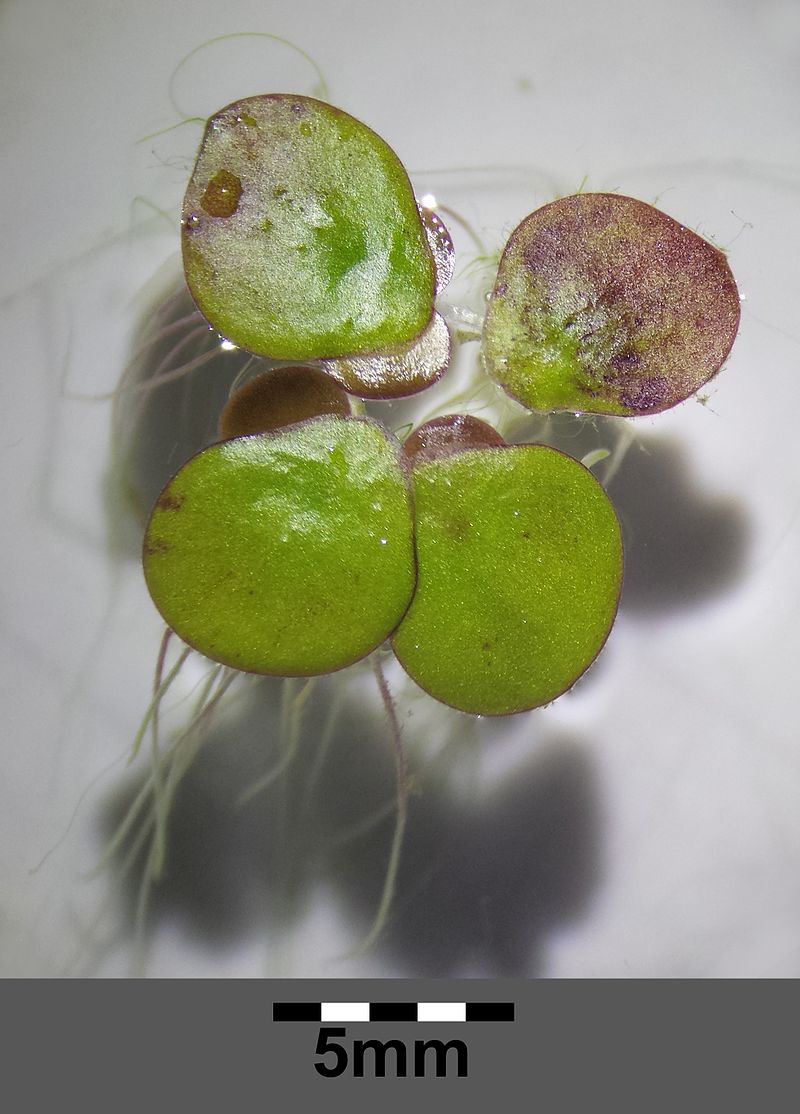
This year seems to be the year of Greater Duckweed (Spirodela polyrhiza), a great rarity in VC64. It has come out of nowhere, with Mike Wilcox finding it along kilometres of the Leeds & Liverpool Canal upstream of Leeds, while I have found it on the Aire & Calder Navigation in Woodlesford with abundant Fat Duckeed (Lemna gibba).
An area where earth had been moved earlier in the year by Rothwell Football Club has rewarded me with both (not so)Common Ramping-fumitory (Fumaria muralis) and the quirky (but otherwise past its best) rusty orange fruiting spikes of Quinoa (Chenopodium quinoa).
Down at St Aidan's there were a few fruiting plants of the VC64 rarity Nodding Bur-Marigold (Bidens cernua var. cernua).
While obscure corners of Rothwell Country Park have rewarded me with Argentinean Vervain (Verbena bonariensis), Japanese Anemone (Anemone x hybrida 'Honorine Jobert'), Japanese Quince (Chaenomeles japonica), and somehow, and showing the tenacity of plants, a yellow-flowered Hybrid Tea Rose (Rosa cultivar) growing out of an old spoil heap.
Elsewhere the stuff of nightmares. Floating Pennywort (Hydrocotyle ranunculoides) in the Navigation. In theory finding this plant, while still so tenuously established, is great as it affords the opportunity for a rapid response to protect the canal and river from further spread. Unfortunately this does not account for the ineptitude of the Canals and Rivers Trust, which has not to date lived up to its self-proclaimed role as "protector" and "custodian" of England's waterways. This despite having been informed in July (photo late September) and having direct management control over this location.
Quite often the areas most poorly known are those on our own doorsteps. And yet these are the very locations we have the luxury of getting to know intimately, through the seasons and across the years. My local patch encompasses anywhere I can readily walk to from home, so allows for a variety of circular routes and diversions over a two to four hour period. It takes in the village, two VCs (63 & 64), rivers and waste ground, arable and woodland, post-industrial sites and ancient meadows. But a lot of bog standard suburban and rural habitats. So I am always amazed that there are still new things to find five years on. A slight difference in date or direction, and the familiar is thrown into new light and something new catches the eye. The more you walk a route the more you see, the background quite literally bleeds into the foreground as the eye detects increasing detail and the brain perceives even greater subtleties in shade and form.
Here are some recent highlights from my local patch. A bit heavy on the non-natives, but to everything there is a season ... (turn, turn turn, you know the rest!). I would be keen to receive news from the local patches of others to help build up knowledge of all those overlooked little corners where the mundane mingles with the unexpected.
This year seems to be the year of Greater Duckweed (Spirodela polyrhiza), a great rarity in VC64. It has come out of nowhere, with Mike Wilcox finding it along kilometres of the Leeds & Liverpool Canal upstream of Leeds, while I have found it on the Aire & Calder Navigation in Woodlesford with abundant Fat Duckeed (Lemna gibba).
Photo by Stefan Lefnaer (Wikimedia Commons)
An area where earth had been moved earlier in the year by Rothwell Football Club has rewarded me with both (not so)Common Ramping-fumitory (Fumaria muralis) and the quirky (but otherwise past its best) rusty orange fruiting spikes of Quinoa (Chenopodium quinoa).
While obscure corners of Rothwell Country Park have rewarded me with Argentinean Vervain (Verbena bonariensis), Japanese Anemone (Anemone x hybrida 'Honorine Jobert'), Japanese Quince (Chaenomeles japonica), and somehow, and showing the tenacity of plants, a yellow-flowered Hybrid Tea Rose (Rosa cultivar) growing out of an old spoil heap.
Elsewhere the stuff of nightmares. Floating Pennywort (Hydrocotyle ranunculoides) in the Navigation. In theory finding this plant, while still so tenuously established, is great as it affords the opportunity for a rapid response to protect the canal and river from further spread. Unfortunately this does not account for the ineptitude of the Canals and Rivers Trust, which has not to date lived up to its self-proclaimed role as "protector" and "custodian" of England's waterways. This despite having been informed in July (photo late September) and having direct management control over this location.
Less troublesome but widely planted and naturalised in the local area are Swedish Whitebeam (Sorbus intermedia) and Mougeot's Whitebeam (Sorbus mougeotii). Note the greater number and closer arrangement of the leaf veins of the latter.
And of course I always have one eye open for the infraspecifics. I'm not sure if I am just noticing it more now that I know it exists, or if it is genuinely spreading, but I do have a soft spot for this variety of Prickly Sowthistle (Sonchus asper subsp. asper var. integrifolius). This time at Swillington Park.
Here's to what the next season has to offer. Happy hunting.
Thursday, 21 September 2017
Geranium orientalitibeticum New to Britain
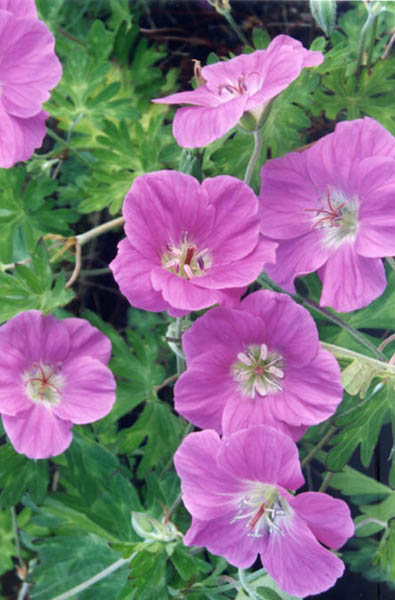
Nicky Vernon and Bruce Brown sent me a brilliant list of records a few weeks back for a site in the middle of nowhere, or as good as for this part of the world, up on Draughton Moor (VC64). Amongst an impressive assemblage of garden escapes one name jumped out at me - Geranium orientali-tibeticum. I did not really doubt it given the recorders, and also because it is quite a distinctive species with its yellow marbled leaves. But being a Crane's-bill fan (verging on a stamp collector when it comes to Dusky Crane's-bill Geranium phaeum and its ilk) I wanted to see more. The weather has not yet allowed me to pay homage in person, so I was very pleased today to hear Nicky and Bruce had been back and taken photographs (below).
To the best of my knowledge this species has never been recorded growing wild in Britain and Ireland (based on the BSBI Distribution Database). A slight surprise given this is a relatively well known garden plant, perhaps a little old fashioned these days, which spreads prolifically by rhizomes. The latter trait probably identifies one reason why it is less widely grown these days, and is also a possible means for its arrival at the site. Nicky notes that trees had been planted nearby so it may have come with these, or with the Montbretia (Crocosmia x crocosmiiflora), another thug, growing nearby.
Photo by Ghislain118 via Wikimedia Commons
And if you are wondering whether to hyphen (as commonly done) or not, this is neatly and honestly explained by Peter Yeo in his monograph on the genus. The hyphen was added by him to make it easier to read and pronounce the name, and is not strictly correct. I can see his point.
Sunday, 3 September 2017
Skipton and Embsay
On Saturday I took a trip on the train out to Skipton (VC64) to start work on a couple of under-recorded hectads. I picked a circular route out to Embsay and the reservoir. It did not turn out to be the most inspiring countryside with intensive farmland in the lowland and a 'sheep-wrecked' upland edge. But needs must with the pressures of Atlas 2020 mounting, and it just means you have to look a little harder.
The first nice find was a good stand of Purple Loosestrife (Lythrum salicaria) along Springs Canal, later to be seen again at the entrance to Skipton Wood. This attractive plant does not appear to have been recorded from this hectad previously.
Walking up The Bailey I was able to look up onto the walls of Skipton Castle where there were naturalised colonies of Aubrieta (Aubrieta deltoidea) and Golden Alison (Aurinia saxatilis). The former had not been recorded here previously, and the only other record for the hectad was last century (pre-1999, details very vague as is the case for too many records). Golden Alison was new to the hectad.
After a dull walk down into Embsay things picked up again with a number of oddities along Brackenley Lane. First up was a couple of plants of Upright Spurge (Euphorbia stricta). This is a rare British native but it is a casual up here. I see it is listed by some seed suppliers as 'Golden Foam'. A nice plant but I am not sure I need to grow it my garden. Each to their own.
Reaching the reservoir I couldn't wait to get down to the shore to look for drawdown flora. Unfortunately this is one of the reservoirs where this is very poorly developed and there were none of the specialities. The highlights being Tufted Forget-me-not (Myosotis laxa) and Marsh Yellow-cress (Rorippa palustris). The latter the first record for the hectad since pre-1969. I was then pleased to find a bush of Glandular Dog-rose (Rosa squarrosa), a hectad first, swiftly followed by yet another in the form of Musk (Mimulus moschatus). A single large clump was growing in the northern inflow.
Heading up onto the Moor, there was only slim pickings but it allowed me to record the usual suspects. The nicest find was Climbing Corydalis (Ceratocapnos claviculata). I then dropped down back towards Embsay. A few useful records were made on route, mainly garden escapes and plantings. The biggest surprise was Algerian Ivy (Hedera algeriensis) established in plantation behind the roadside wall. I suspect this species may be overlooked elsewhere, being passed over for Irish Ivy (Hedera hibernica Hibernica Group). Look out for large leaves, ruby red petioles and young stems, and a pine scent.
An old wall in Embsay had a nice bush of Garden Lavender (Lavandula angustifolia) growing out of it, no doubt self-seeded from a nearby garden.
Having a little time to kill before catching my train I wandered up to Skipton Woods. Not the most interesting of woods (especially at this time of year), too many feet and too much bare ground, but adding a few plants that had not been recorded previously. Including such obvious species as Branched Bur-reed (Sparganium erectum). It was also good to find the Herb-Paris (Paris quadrifolia) just about still in leaf, allowing me to collect a detailed grid reference. However justifying this brief diversion was the best find. A large plant of Indian-rhubarb (Darmera peltata) has somehow managed to establish in the bank of Eller Beck by the boardwalk. I'm not sure if this is the same plant last reported in 2004, the location details are too vague, but it seems likely.
The first nice find was a good stand of Purple Loosestrife (Lythrum salicaria) along Springs Canal, later to be seen again at the entrance to Skipton Wood. This attractive plant does not appear to have been recorded from this hectad previously.
Purple Loosestrife - I am cheating with this photo as it was taken at
Lowther Lake a couple of weeks back
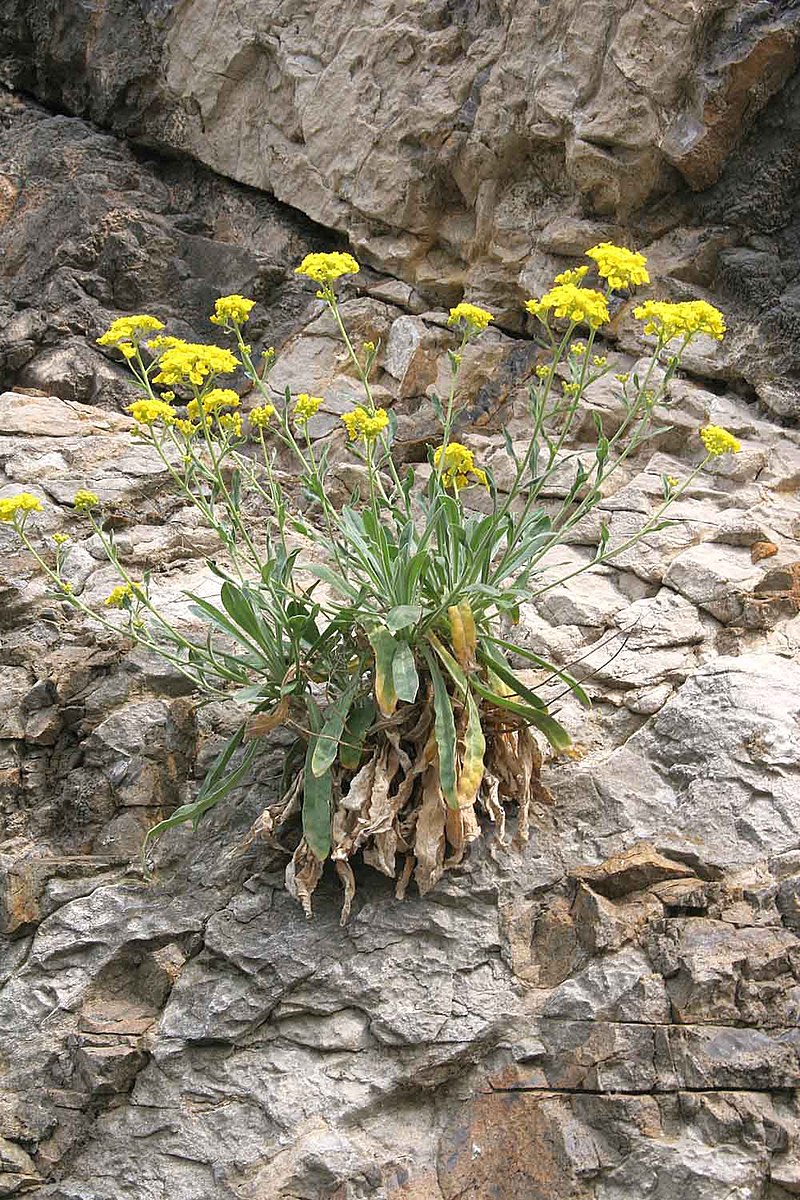
Walking up The Bailey I was able to look up onto the walls of Skipton Castle where there were naturalised colonies of Aubrieta (Aubrieta deltoidea) and Golden Alison (Aurinia saxatilis). The former had not been recorded here previously, and the only other record for the hectad was last century (pre-1999, details very vague as is the case for too many records). Golden Alison was new to the hectad.
Golden Alison (photo by Prazak from Wikimedia Commons)
After a dull walk down into Embsay things picked up again with a number of oddities along Brackenley Lane. First up was a couple of plants of Upright Spurge (Euphorbia stricta). This is a rare British native but it is a casual up here. I see it is listed by some seed suppliers as 'Golden Foam'. A nice plant but I am not sure I need to grow it my garden. Each to their own.
Old walls further along the lane had Caucasian Stonecrop (Sedum spurium) and Snow-in-summer (Cerastium tomentosum), and then this surprise by the steps up to the footpath across the fields. Yellow Oxeye (Telekia speciosa).
Emerging onto Pasture Road I found a nice stand of Dusky Crane's-bill (Geranium phaeum var. phaeum) where Embsay Beck passes under the road. Still a few flowers present despite the season.
Musk, photo taken last year at Fewston Reservoir
Heading up onto the Moor, there was only slim pickings but it allowed me to record the usual suspects. The nicest find was Climbing Corydalis (Ceratocapnos claviculata). I then dropped down back towards Embsay. A few useful records were made on route, mainly garden escapes and plantings. The biggest surprise was Algerian Ivy (Hedera algeriensis) established in plantation behind the roadside wall. I suspect this species may be overlooked elsewhere, being passed over for Irish Ivy (Hedera hibernica Hibernica Group). Look out for large leaves, ruby red petioles and young stems, and a pine scent.
An old wall in Embsay had a nice bush of Garden Lavender (Lavandula angustifolia) growing out of it, no doubt self-seeded from a nearby garden.
Having a little time to kill before catching my train I wandered up to Skipton Woods. Not the most interesting of woods (especially at this time of year), too many feet and too much bare ground, but adding a few plants that had not been recorded previously. Including such obvious species as Branched Bur-reed (Sparganium erectum). It was also good to find the Herb-Paris (Paris quadrifolia) just about still in leaf, allowing me to collect a detailed grid reference. However justifying this brief diversion was the best find. A large plant of Indian-rhubarb (Darmera peltata) has somehow managed to establish in the bank of Eller Beck by the boardwalk. I'm not sure if this is the same plant last reported in 2004, the location details are too vague, but it seems likely.
Indian-rhubarb
Labels:
Aurina,
Darmera,
Euphorbia,
Geranium,
Hedera,
Lythrum,
Mimulus,
Paris,
Rosa squarrosa,
Sedum,
Skipton,
Sparganium,
Telekia
Friday, 1 September 2017
Settle Sojourns
I've been to Settle a number of times this year, it being a handy base for recording this hectad for Atlas 2020. However, I have had little time for posting pictures so it is time for a little catch up. In no particular order ...
Virginia-creeper (Parthenocissus quinquefolia), colonising a wall on the Highway and new to the hectad
Perennial Sunflower (Helianthus x laetiflorus 'Lemon Queen'), start of Stackhouse Lane, Giggleswick. First mentioned to me by Mike Canaway
Double-flowered Feverfew (Tanacetum parthenium 'Bachelor's Buttons') at Langcliffe Mill
My second favourite, sad I know, Prickly Sowthistle (after subsp. glaucescens) Sonchus asper subsp asper var. integrifolius in Giggleswick
Boo Hiss, Garden Lady's-mantle (Alchemilla mollis) making its bid for world domination, Craven Lime Works
Hydrangea (Hydrangea macrophylla), Craven Lime Works
How many succulents can you spot? churchyard wall Langcliffe. Some answers below
Hen-and-chicks (Jovibarba heuffelii)
Oregon Stonecrop (Sedum oreganum subsp. oreganum)
Cobweb House-leek (Sempervivum arachnoideum)
Armenian Crane's-bill (Geranium psilostemon), new to VC64, west bank of River Ribble, Giggleswick
Stinking Tutsan (Hypericum hircinum) by River Ribble downstream of Settle. Never put a piece in your pocket to look at later and then get on a crowded train!
Thursday, 31 August 2017
A Tale of Two Picris
Hawkweed Oxtongue (Picris hieracioides subsp. hieracioides) is a native plant of calcareous soils being found on waysides, old quarries, chalk cliffs and downland. It is always a nice find in Yorkshire as it is not common up here. I have only seen it in VC64 growing on the old walls of Fountains Abbey (photo) and at Burton Leonard Lime Quarries Nature Reserve, although at the latter I must admit I did not determine the subspecies.
In recent years it has become known that several other subspecies also occur, or have occurred previously, in Britain. Most of these are non-native casuals. Generally the native plant can be distinguished from these by its longer branches and capitula on relatively long pedicels.
This came back to me today when I stumbled across a small colony of Hawkweed Oxtongue in Rothwell Country Park (VC63). This is not a location where the native would be expected, as this site is restored colliery land and was sown with a seed mix in the past. Sure enough this plant did not look quite right, with me having at the back of my mind that if it had some capitula near-sessile it was worth a closer look.
Of course coming home and revisiting the above photograph the differences are quite obvious. The current plant is subsp. villarsii (its synonym of subsp. umbellata is more descriptive). It has flowers arising in tiers on short branches, and the terminal inflorescence is sub-umbellate. Of course this latter trait was most obvious in the plant I decapitated for ID purposes, so I did not get a photograph in situ but I did manage to salvage a few photos later (see below). The phyllaries are meant to be blackish-green, this seems a bit variable and was not as pronounced as I was expecting from reading the key previously. It is probably less useful than the other characteristics of the inflorescence, but perhaps it darkens when pressed.
In recent years it has become known that several other subspecies also occur, or have occurred previously, in Britain. Most of these are non-native casuals. Generally the native plant can be distinguished from these by its longer branches and capitula on relatively long pedicels.
This came back to me today when I stumbled across a small colony of Hawkweed Oxtongue in Rothwell Country Park (VC63). This is not a location where the native would be expected, as this site is restored colliery land and was sown with a seed mix in the past. Sure enough this plant did not look quite right, with me having at the back of my mind that if it had some capitula near-sessile it was worth a closer look.
Of course coming home and revisiting the above photograph the differences are quite obvious. The current plant is subsp. villarsii (its synonym of subsp. umbellata is more descriptive). It has flowers arising in tiers on short branches, and the terminal inflorescence is sub-umbellate. Of course this latter trait was most obvious in the plant I decapitated for ID purposes, so I did not get a photograph in situ but I did manage to salvage a few photos later (see below). The phyllaries are meant to be blackish-green, this seems a bit variable and was not as pronounced as I was expecting from reading the key previously. It is probably less useful than the other characteristics of the inflorescence, but perhaps it darkens when pressed.
Subscribe to:
Posts (Atom)